
A useful video can help shoppers learn about a product, service, or dealership before they call or visit. Adding videos to relevant pages on your DX1 website gives customers another way to get the information they need.
1. Upload the video to YouTube
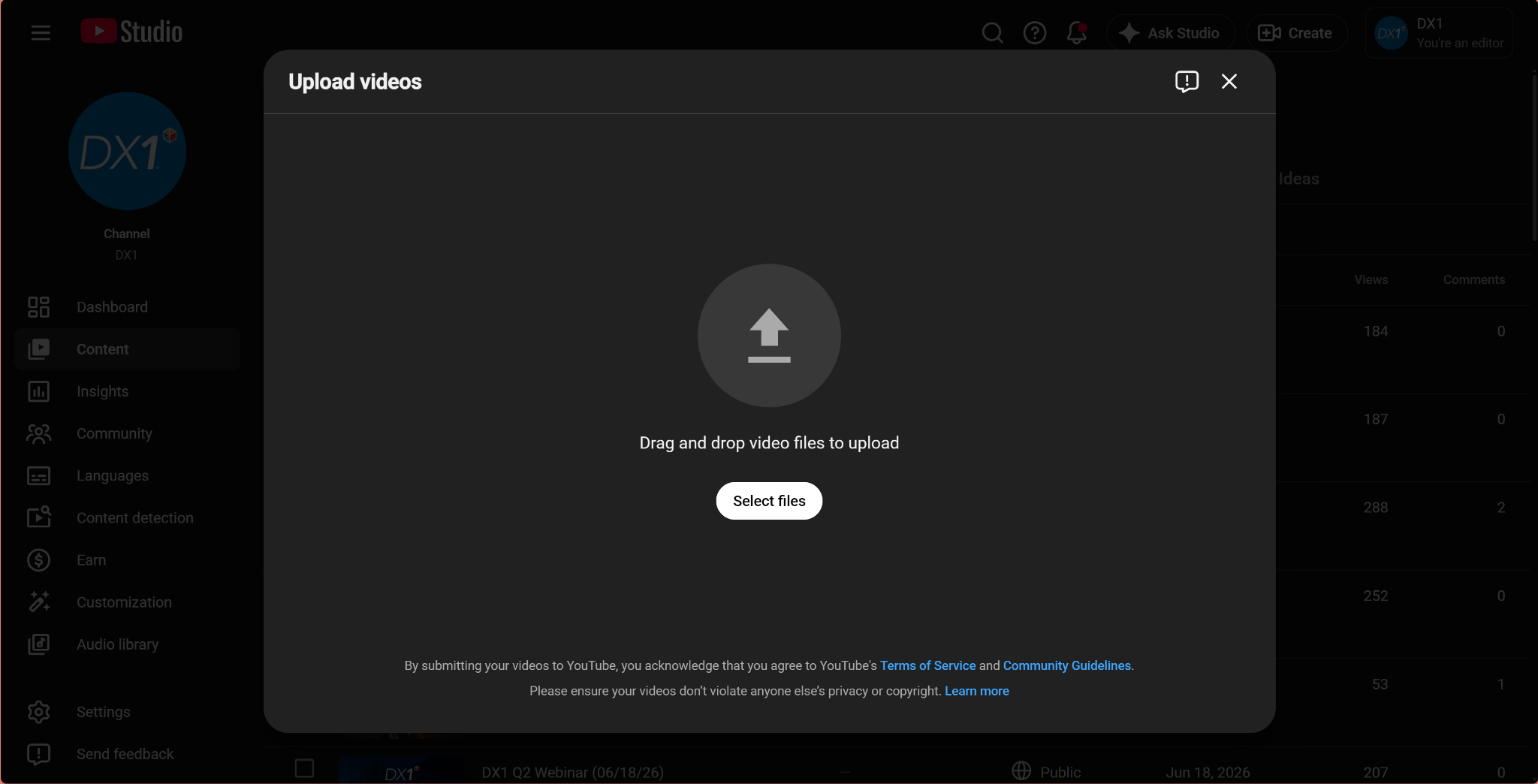
- Open YouTube Studio for the dealership’s YouTube channel. Select Create, then Upload videos.
- Select the video file or drag it into the upload window. Keep the page open until the upload finishes.
[
2. Add useful video details
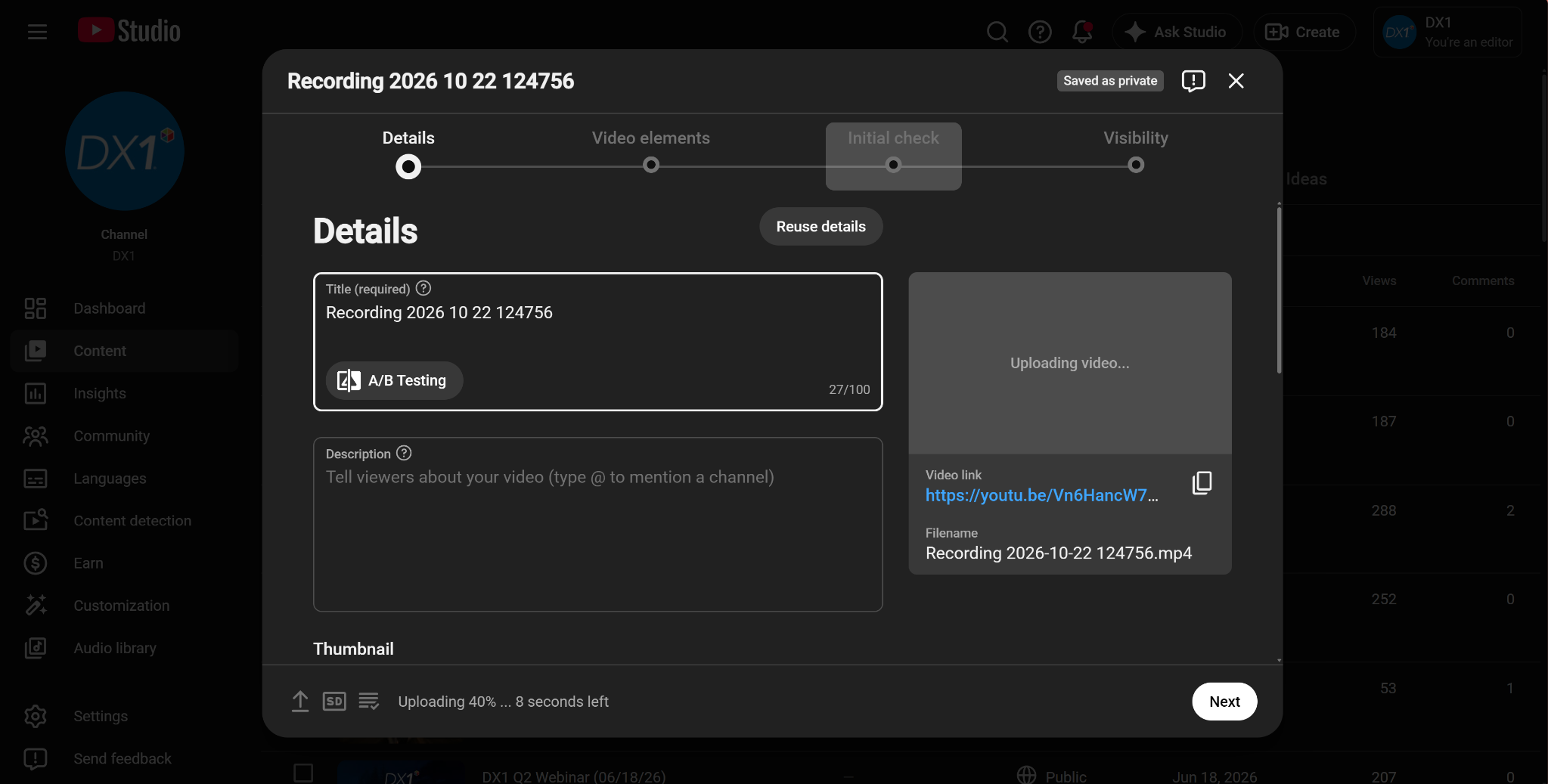
- Enter a clear title that identifies the model, service, or topic. Use wording a customer might search for instead of a generic title such as “New Video.”
- Write a short description with helpful context and a next step, such as visiting the relevant page or contacting the dealership. Choose a thumbnail that helps customers recognize the video.
- Add the video to a relevant playlist when that helps customers find related content.
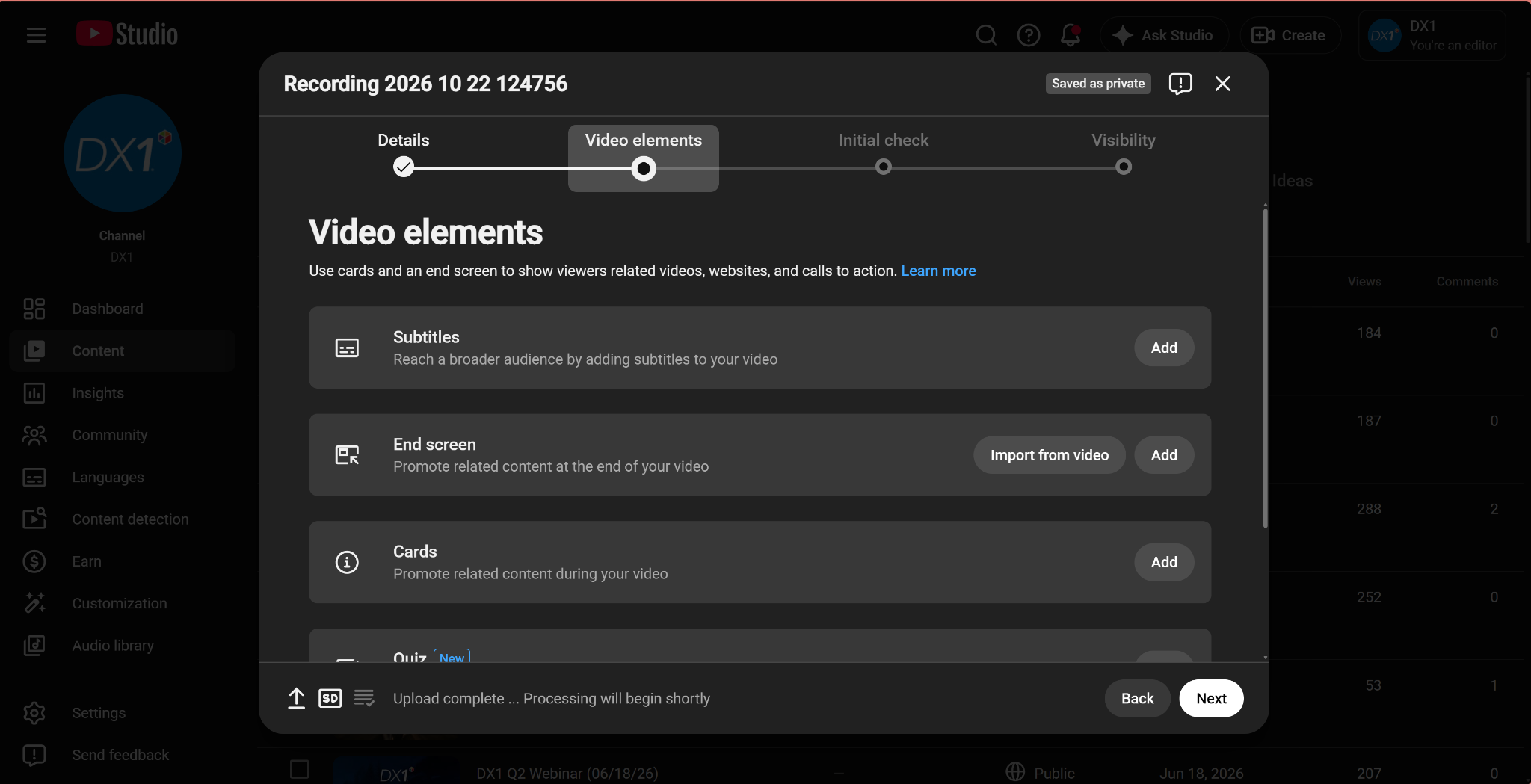
3. Add optional viewing aids
YouTube may offer subtitles, end screens, and cards. Subtitles can make a video easier to follow without sound. End screens and cards can point viewers to related content. Use these options when they support the video’s purpose, and review automated captions for accuracy.
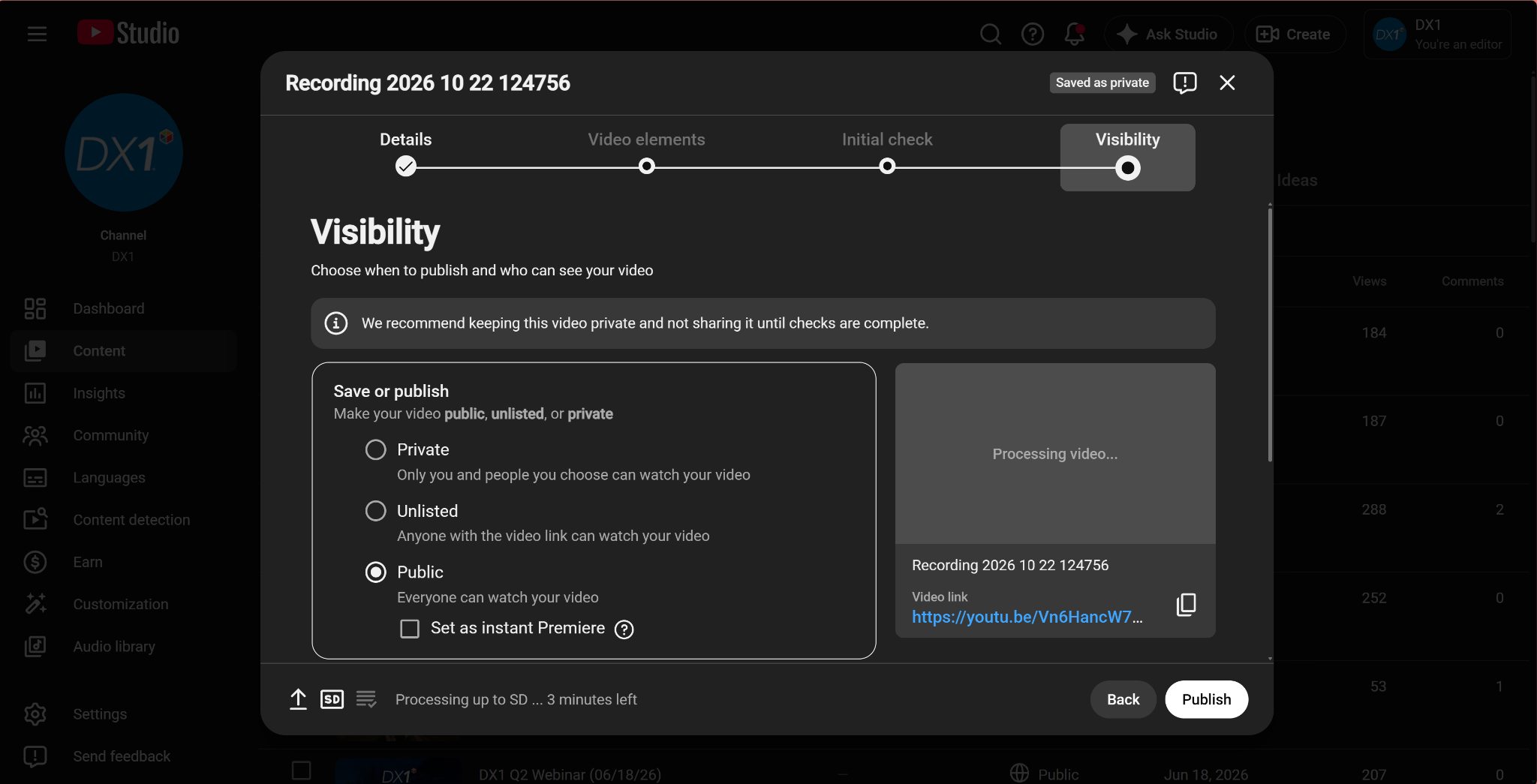
4. Choose who can view the video
- Select a visibility setting before publishing. Use Public when you want the video discoverable on YouTube. Unlisted is useful when you plan to share it by link or place it on the website without making it searchable.
- A Private video is limited to you and people you choose, so it is not suitable for general customer viewing on the website.
- Select Publish. After publishing, copy the video URL. You will paste this URL into the DX1 website module.
Tip: Before adding the link to your website, open it in a separate browser window to confirm the video is viewable with the selected visibility setting.
5. Add the YouTube module to a DX1 page
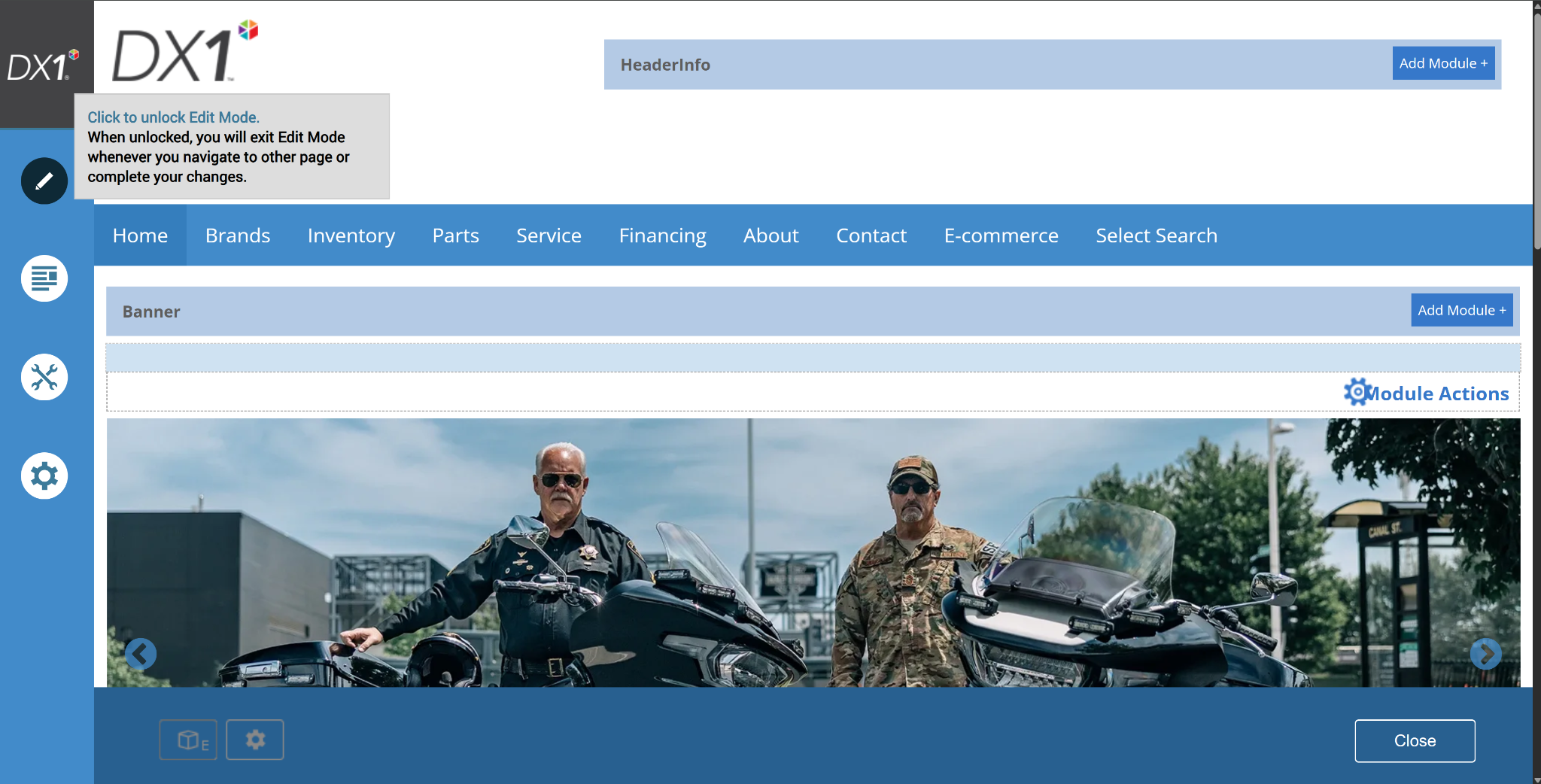
- Open the website page where the video will help customers most, then select the edit pencil to enter edit mode.
- Choose Add Module in the page area where you want the video to appear. For example, place a model overview near related inventory or brand information.
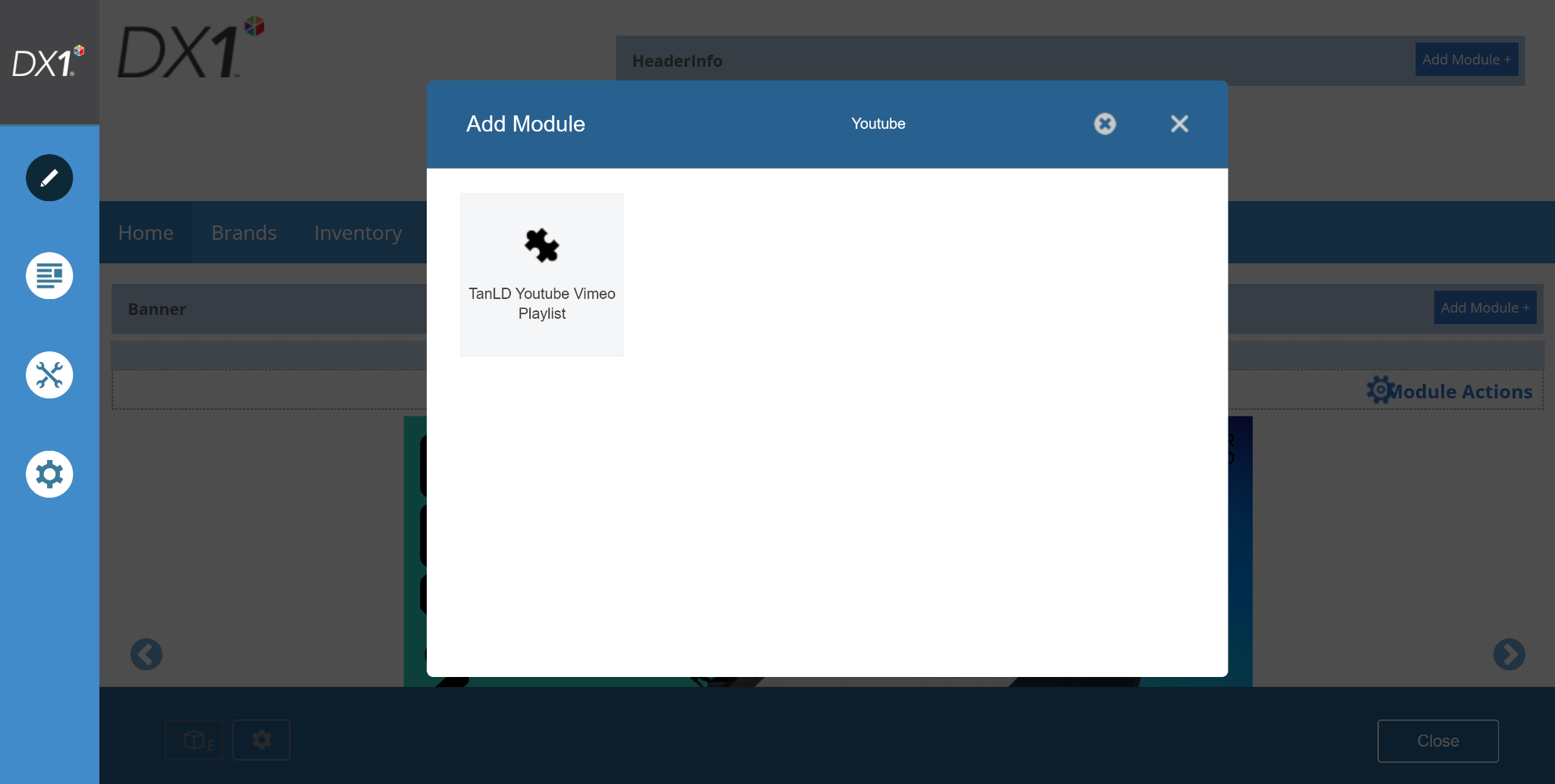
- Search for “YouTube” and select TanLD Youtube Vimeo Playlist.
Placement tip: Put the video near the product or information it explains. A video is more useful when customers can find it alongside the relevant page content.
6. Set up the YouTube module
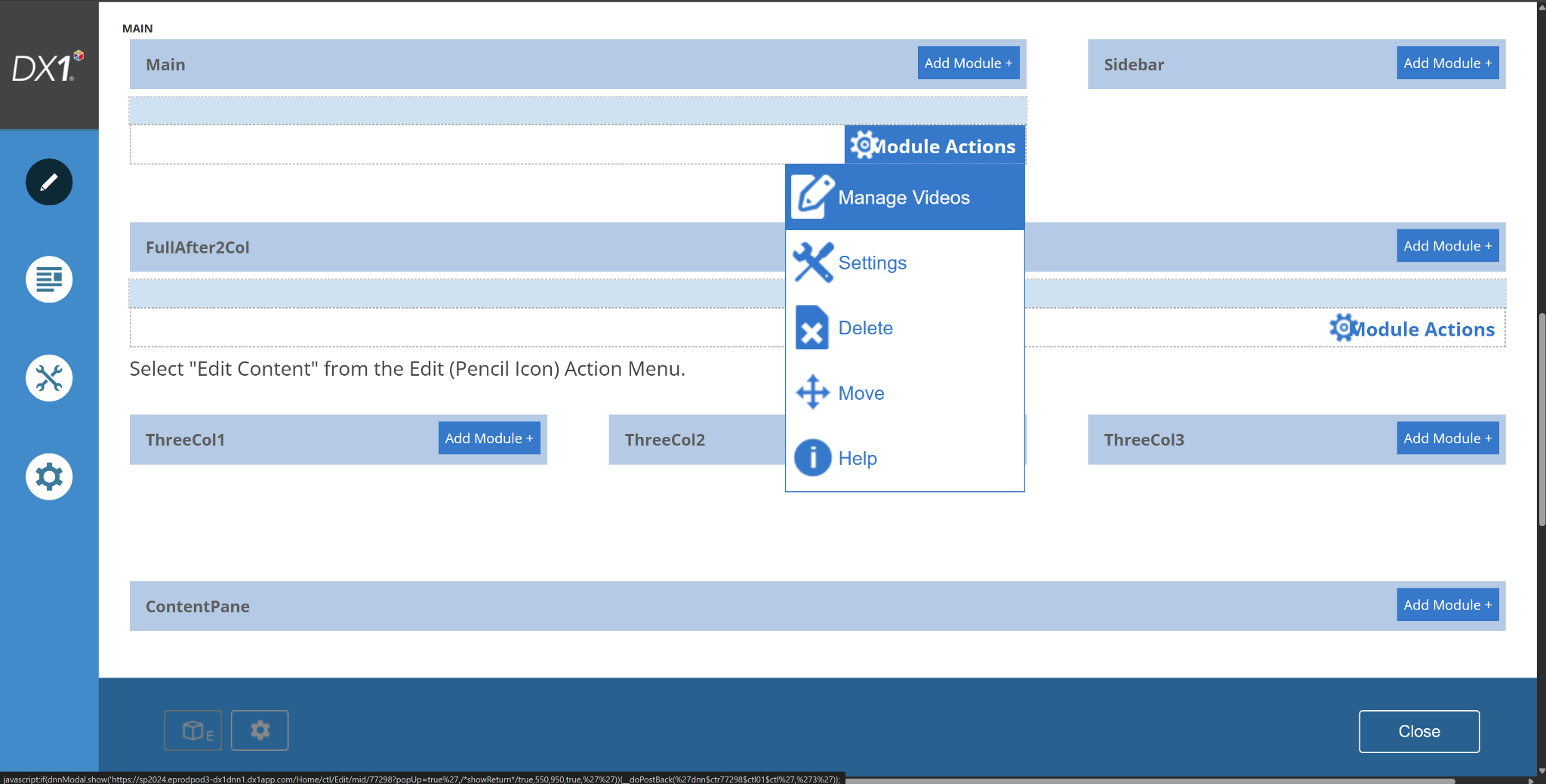
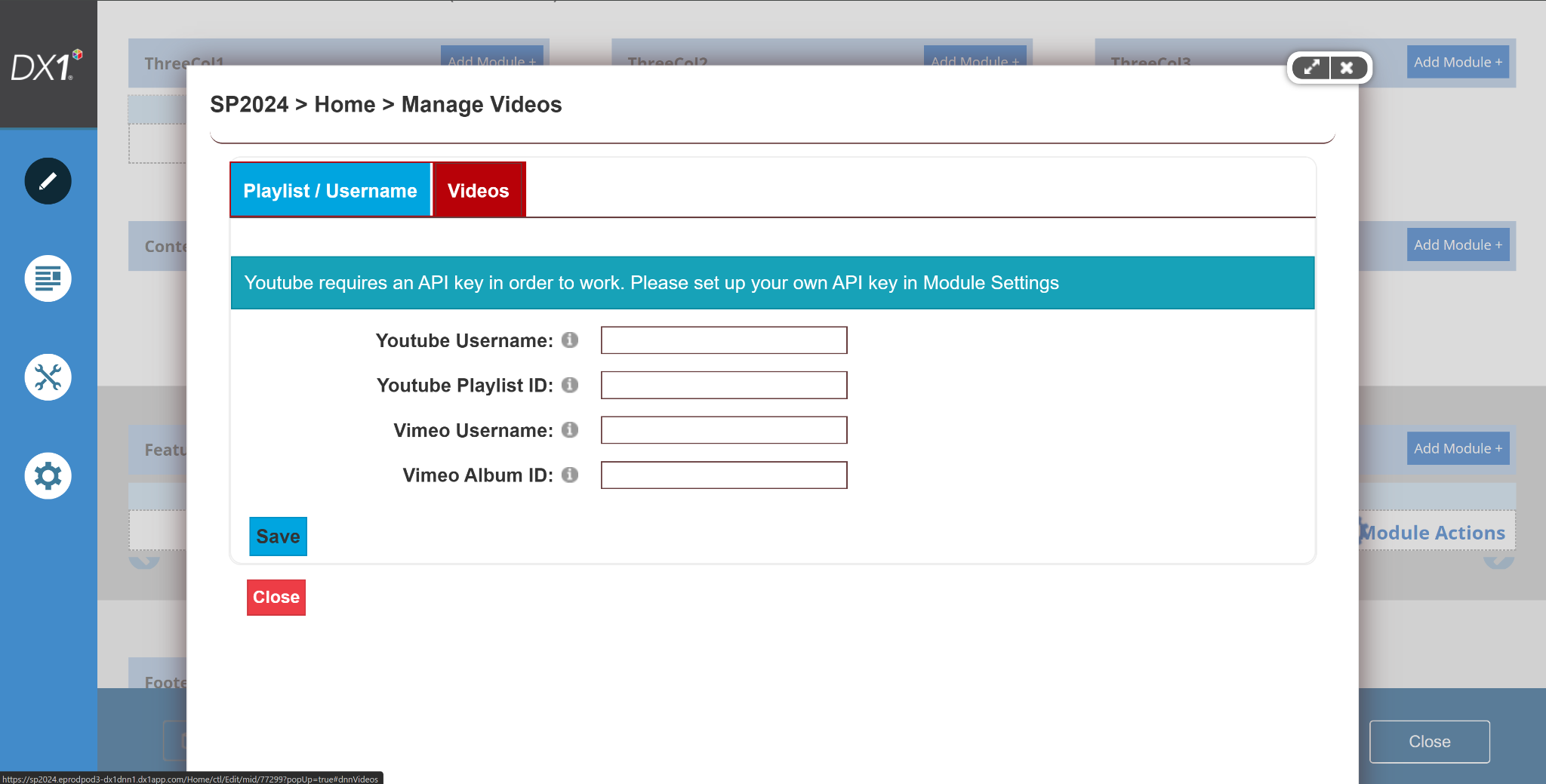
The module requires a YouTube API key. If it is not configured, open Module Actions > Settings and set it up there. Ask your website administrator for help if you do not manage API settings.
7. Add the video URL
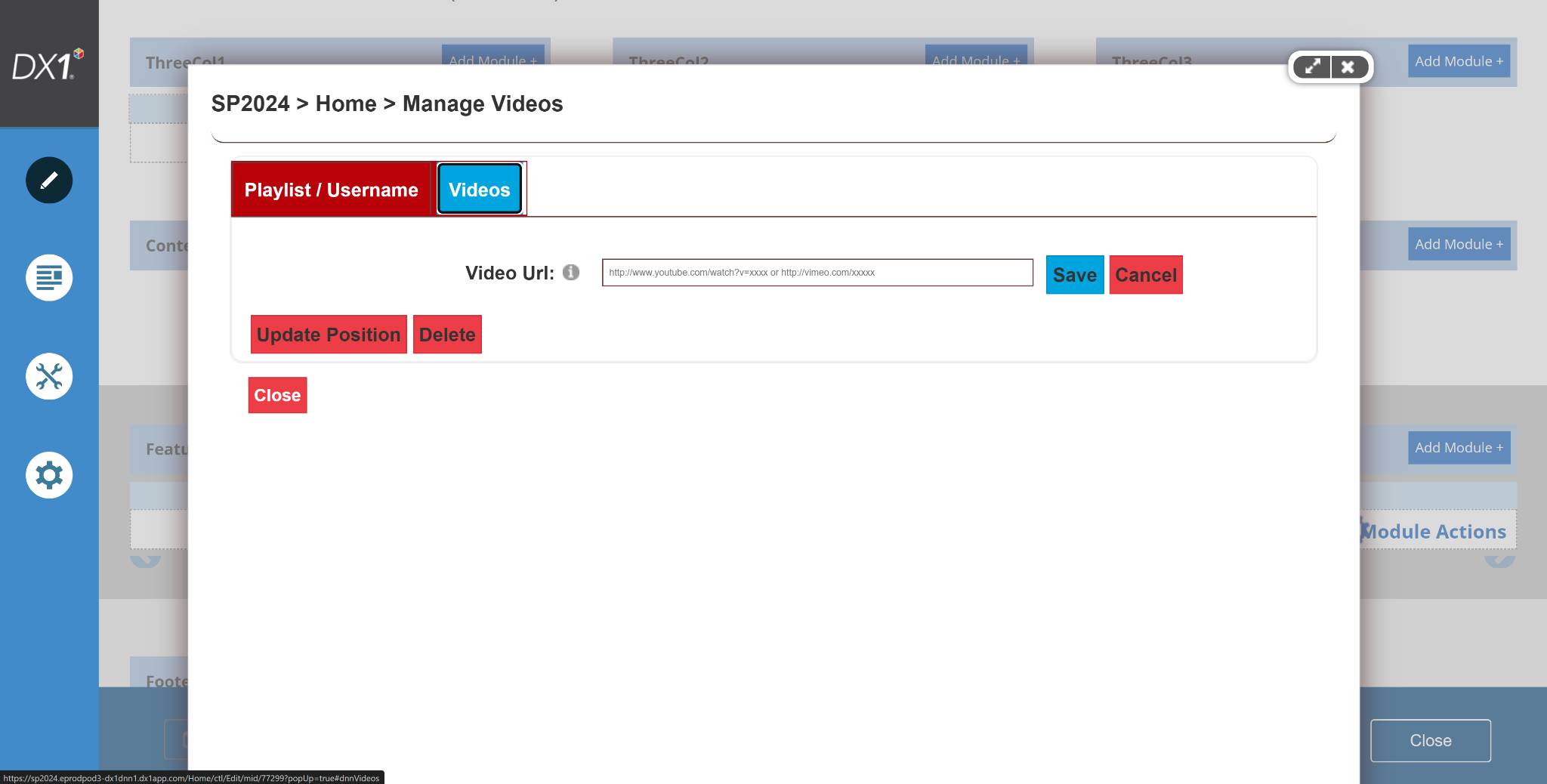
Open Module Actions > Manage Videos, select the Videos tab, paste the YouTube URL, and select Save. The Playlist / Username tab is for channel or playlist settings; use the Videos tab for a specific video link.
8. Check the published page
- Close the video manager and finish editing the website page using the normal save or publish control for your site.
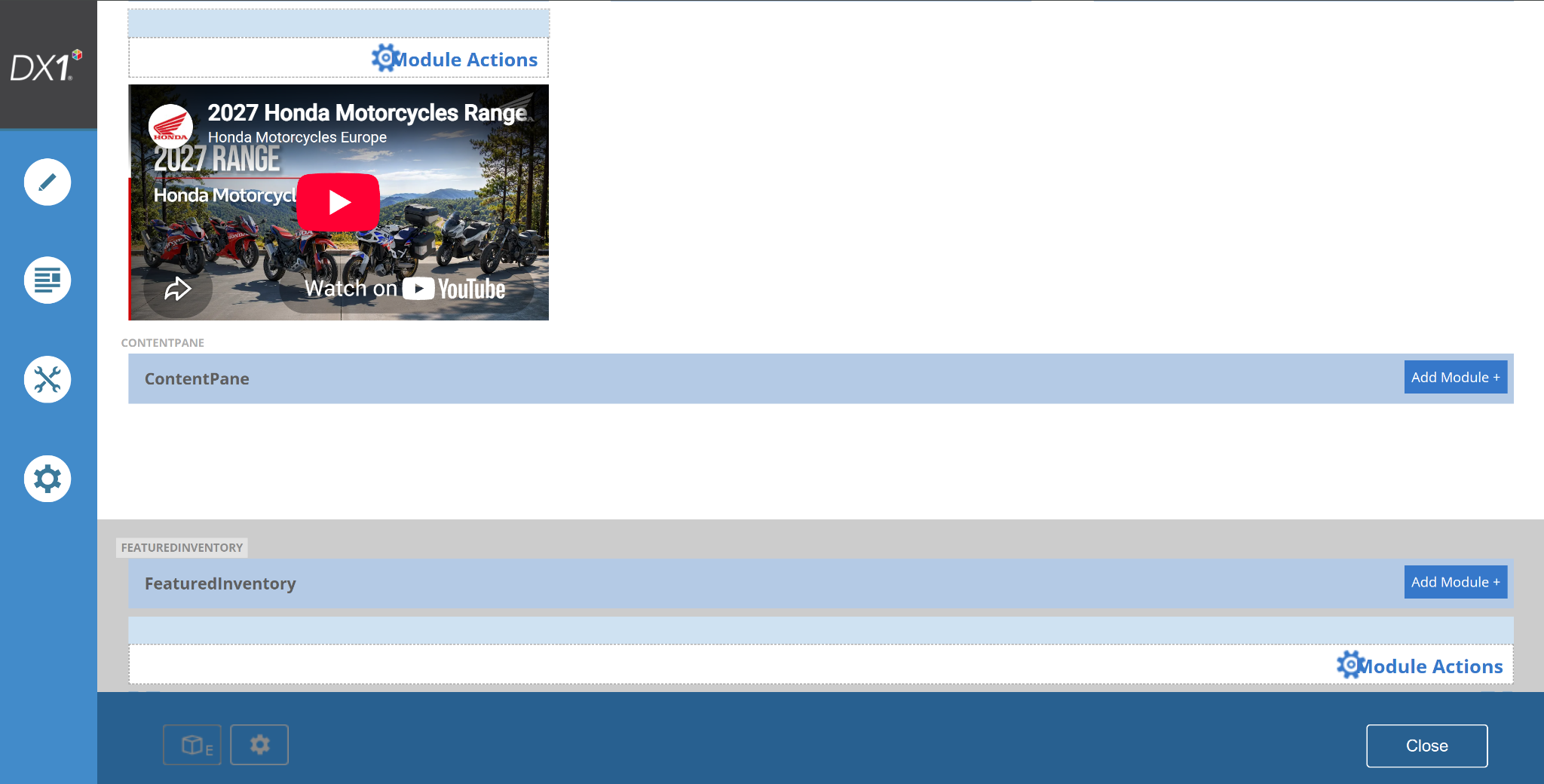
- Open the customer-facing page and confirm the video appears and plays. Check the page on a phone as well as a desktop so the placement works at different screen sizes.
Quick checks if the video does not appear
- Confirm the YouTube URL is correct and the video is Public or Unlisted, not Private.
- Confirm the YouTube API key is set in the module’s Settings.
- Confirm the video was saved in the module’s Videos tab and the website page changes were saved or published.
Business tip: Keep videos current. If a model, offer, or process changes, update or remove the website video so customers are not relying on outdated information.